Client Work · Live · Marketplace
Delta Tutoring
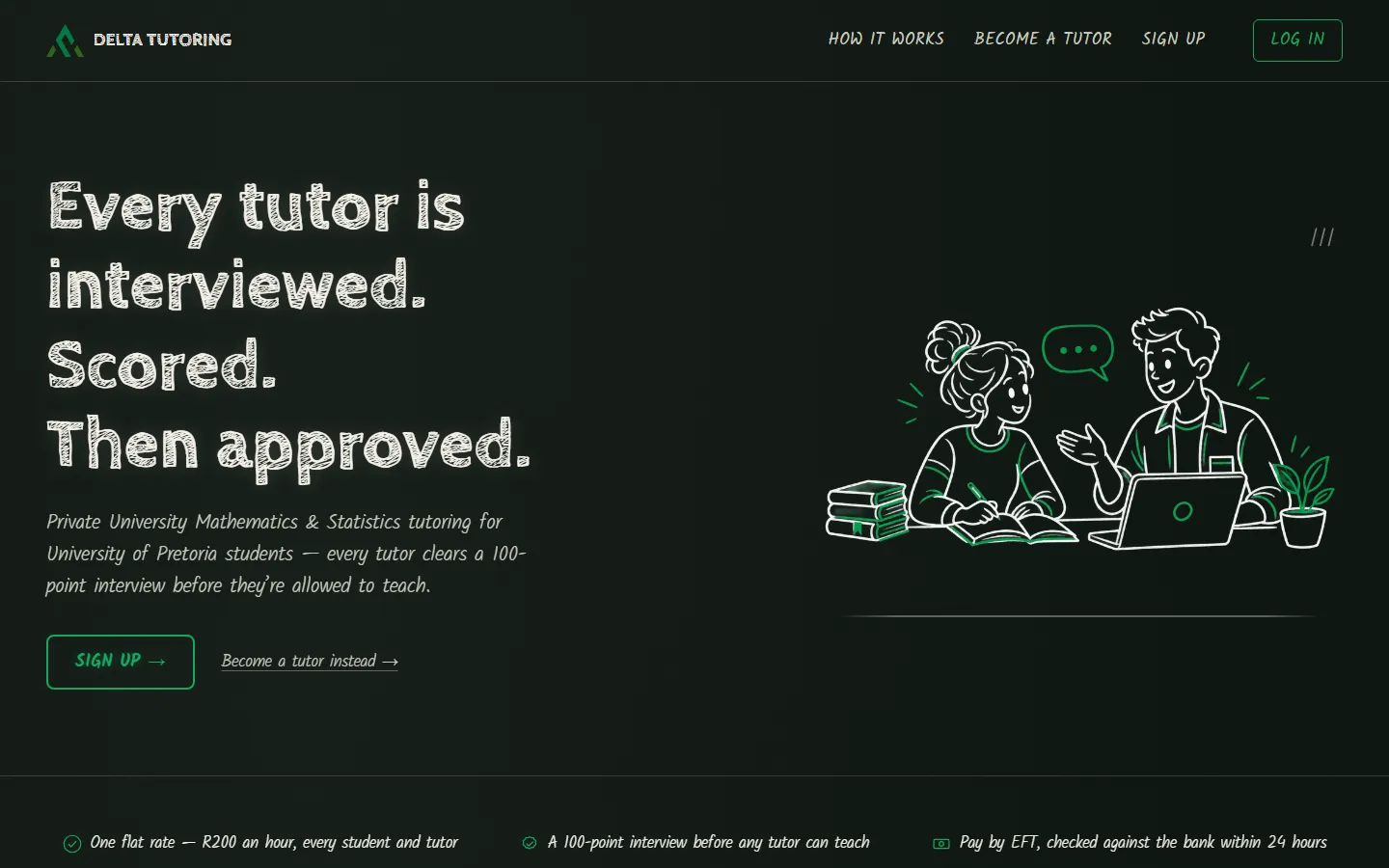
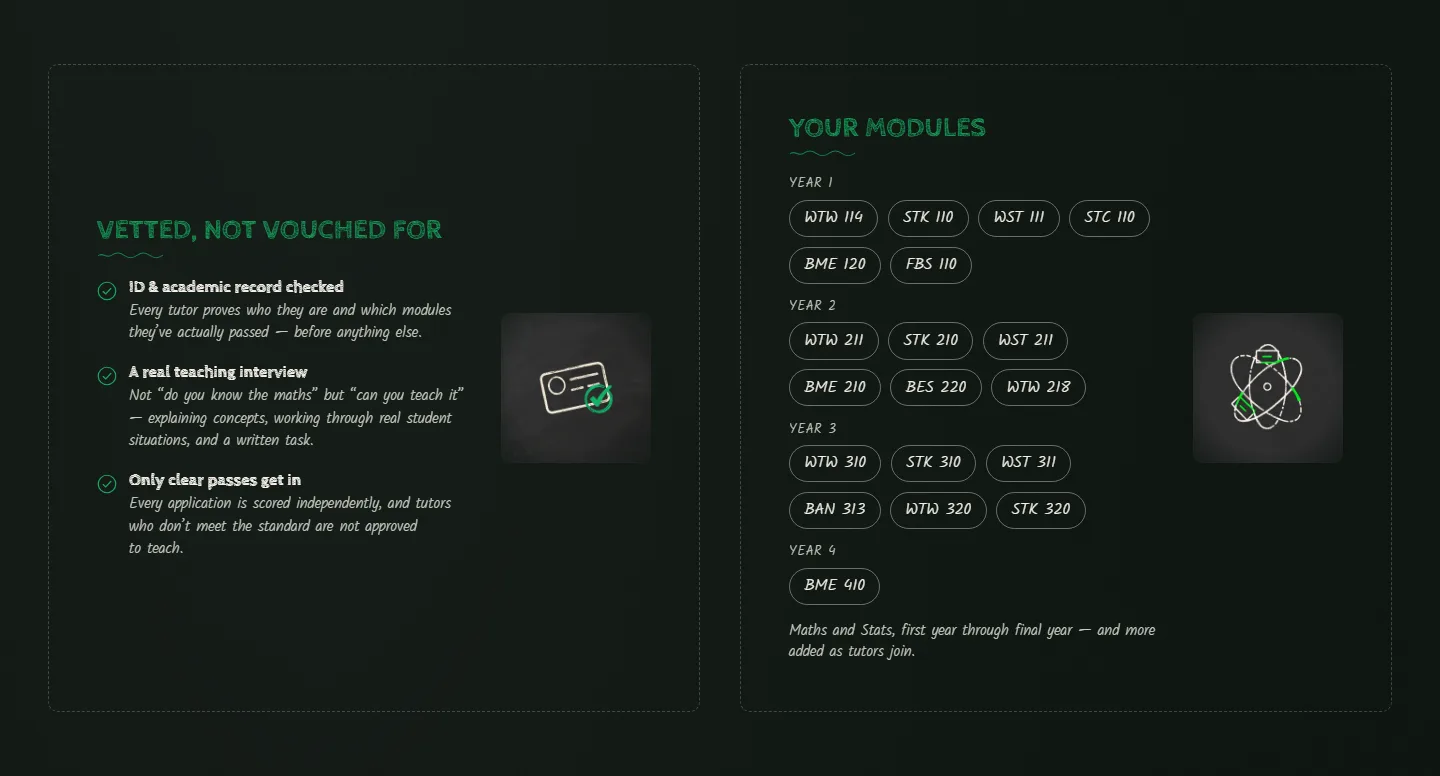
Delta Tutoring is a multi-vendor tutoring marketplace built on WordPress with a custom marketplace plugin: tutor discovery and vetting pipeline, owner-mediated student-tutor matching, bookings, manual EFT payment tracking, in-platform messaging, contracts, and a staff admin dashboard with role-based access and an audit log.
Stack
WordPress · Custom PHP plugin · Basic web hosting · GitHub-based SSH deploy pipeline
The problem
Delta Tutoring needed a marketplace connecting students seeking academic help with vetted tutors, real discovery and search, owner-mediated matching, bookings, manual EFT payments, messaging, and contracts, not just a brochure site, on a tight budget and timeline ahead of the University of Pretoria’s reopening.
The goal
Ship a Phase 1 MVP marketplace fast on WordPress plus a custom plugin, rather than a slower full AWS/Next.js build, covering the complete booking-to-payment-to-review lifecycle plus a full administration console, so the business could launch for the coming academic term.
Engineering decision
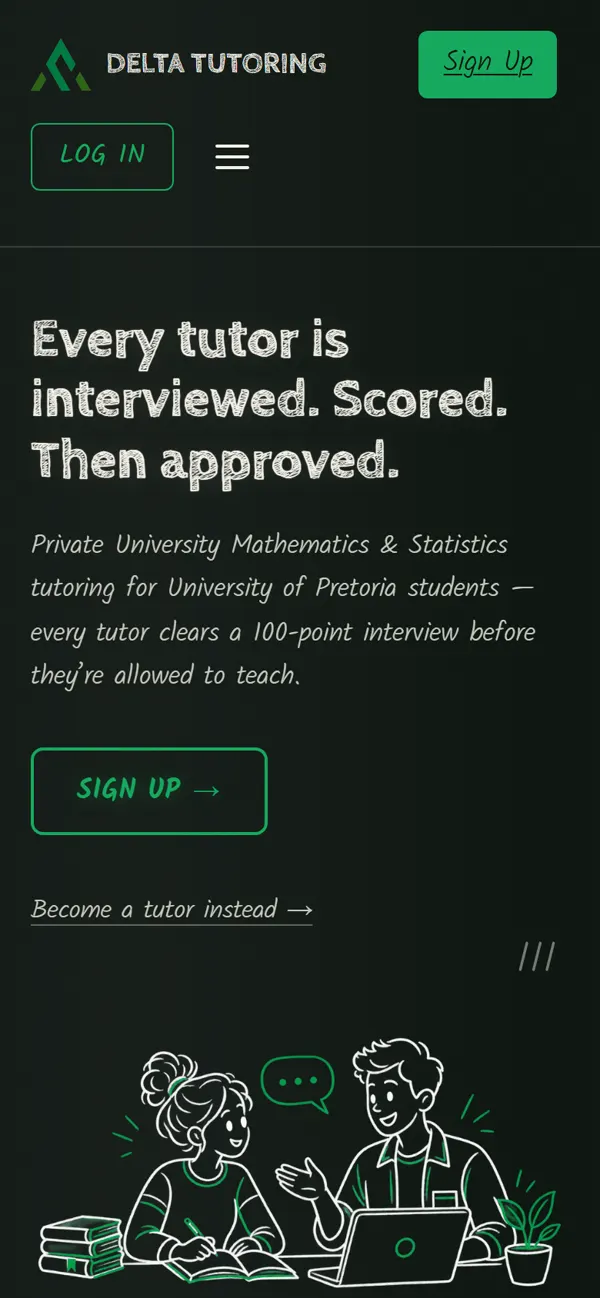
Chose the default WordPress block theme plus a custom marketplace plugin over a fully custom theme, trading visual bespokeness for shipping speed on a fixed timeline.
Tradeoff
Manual EFT payment confirmation, no payment gateway integration in Phase 1, trades automation for a faster, lower-risk launch; a gateway is scoped for Phase 2.
Insights
A tight UAT window meant prioritising the money and trust paths, auth, bookings, payments, first and protecting them if anything had to give, a useful discipline for any fixed-deadline marketplace launch.
Building bookings, payments, messaging, and contracts as a custom plugin rather than bending WooCommerce to fit kept the domain model honest, at the cost of not getting WooCommerce’s ecosystem for free.